TEXT BY ARTIST > CONCEPT OF WORKS > LUNA
LUNA 1994

How long has it passed since the humankind started to measure time.

Clepsydra in Japan has a very history. "Nihon-Shoki", one of the oldest documents in Japan, has following sentences; ' Clepsydra, a precursor of a tick-tock modern clock was made for the first time. It indicates people time.' That was the 7th century. In many cases, time has been indicated using natural power. Then astronomy came in, with which people has a capability to tell more accurate time. It has been also well known that the moon was an important factor to indicate time.

It was good while people measure time, but since when time started measure people?

The first mechanical clock is said to have appeared in Europe in the end of the 13th century. In the middle of the 14th century, a public clock had set up in Padova, Italy. Subsequently in the 15th century, mechanical clocks became used widely in Europe, and that was when the world standard time was adopted. The value of labour and production were said to be valued in terms of time from that time. At present, clocks are overflowing around as if we're under their surveillance.

I worked on "Luna" with time as its theme.

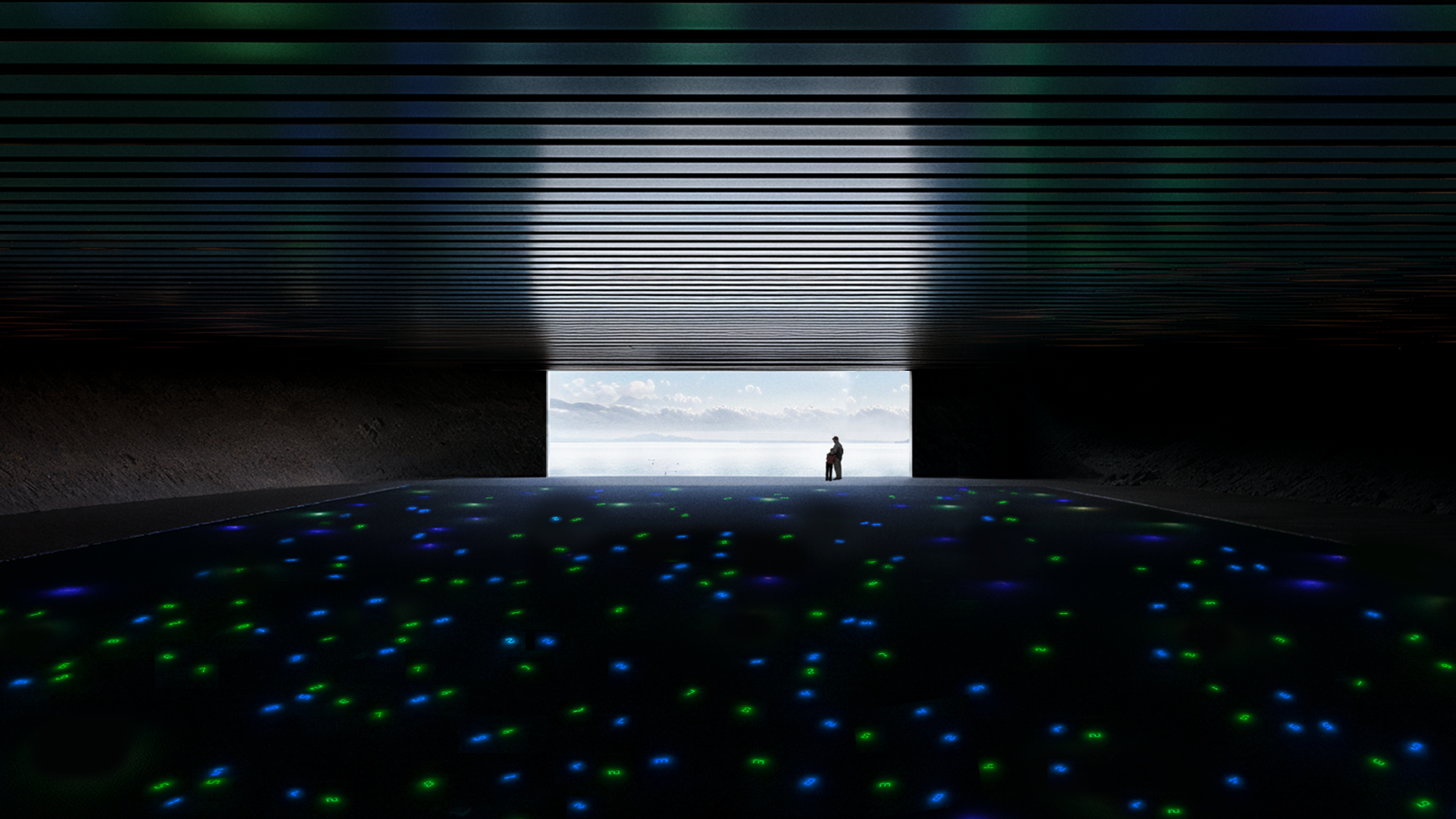
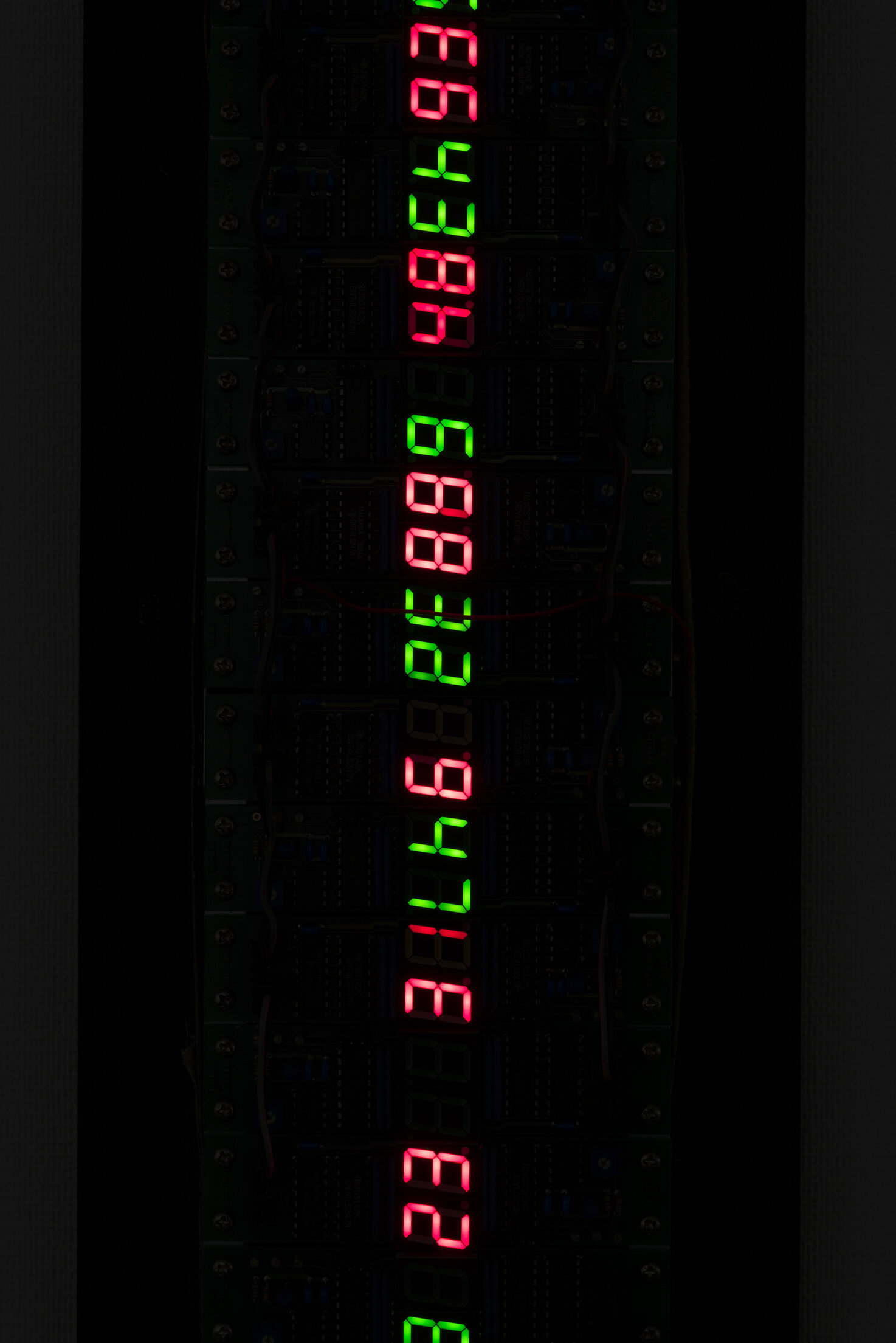
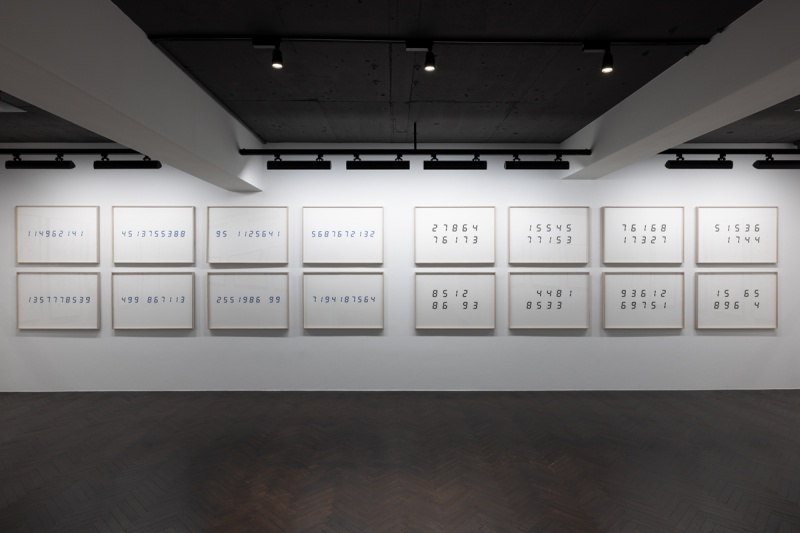
The clock I made indicates 144 inconsistent times. It is digital, ticking from 1 to 9, returning to 1 and repeating all over again. There is no number "0". Some numbers are counted very fast with a speed of 1/10 second and another is counted very slowly like one in an hour.

In 1884, a meridian was established in Greenwich observatory in U.K., and the world time was conveniently standardized from then on. But the subsequent development of physics and mathematics proved that time did not exist on its own. i.e. Time is interacted with and thus inseparable from human's observation. It depends on individuals how they count 'time'. My work, Luna, responds to such people's personal time. This 'time' is defined by people who see and recognize. What I mean by 'time' here is a composition of each 'time' tick-tocking in individuals' minds. In this sense, this work plays a role as a mirror, reflecting individuals' own time. "Luna" means the moon in Latin. The moon is not a fixed star that shines by itself but that mirrors sunlight.

My work, Luna is exhibited only from the evening through the night. Darkness at night is the most suitable to signify real "time", as people used to thought about time by looking at the moon.

6 / 1994


WORK> PORTFOLIO > 1990-1994> LUNA