|
|
| Page 1 2 | |
| James Lingwood : | But a number represents a human being as a cipher _ it is a very reductive way of expressing individuality. |
| Tatsuo Miyajima : | I do not use numbers just as a metaphor for people, the metaphorical possibilities are much wider than that. The individuality of each person is important to recognize the whole image of the installation, in which each part is the same and different, in which each part is equal. In that sense, the absence of hierarchy, the equality of the whole image, is very important. |
| L : | Can you talk about this image being universal? |
| M : | Of course, it is universal. |
| L : | Yet at the same time, the image of the work is in motion, it is ultimately indeterminate. |
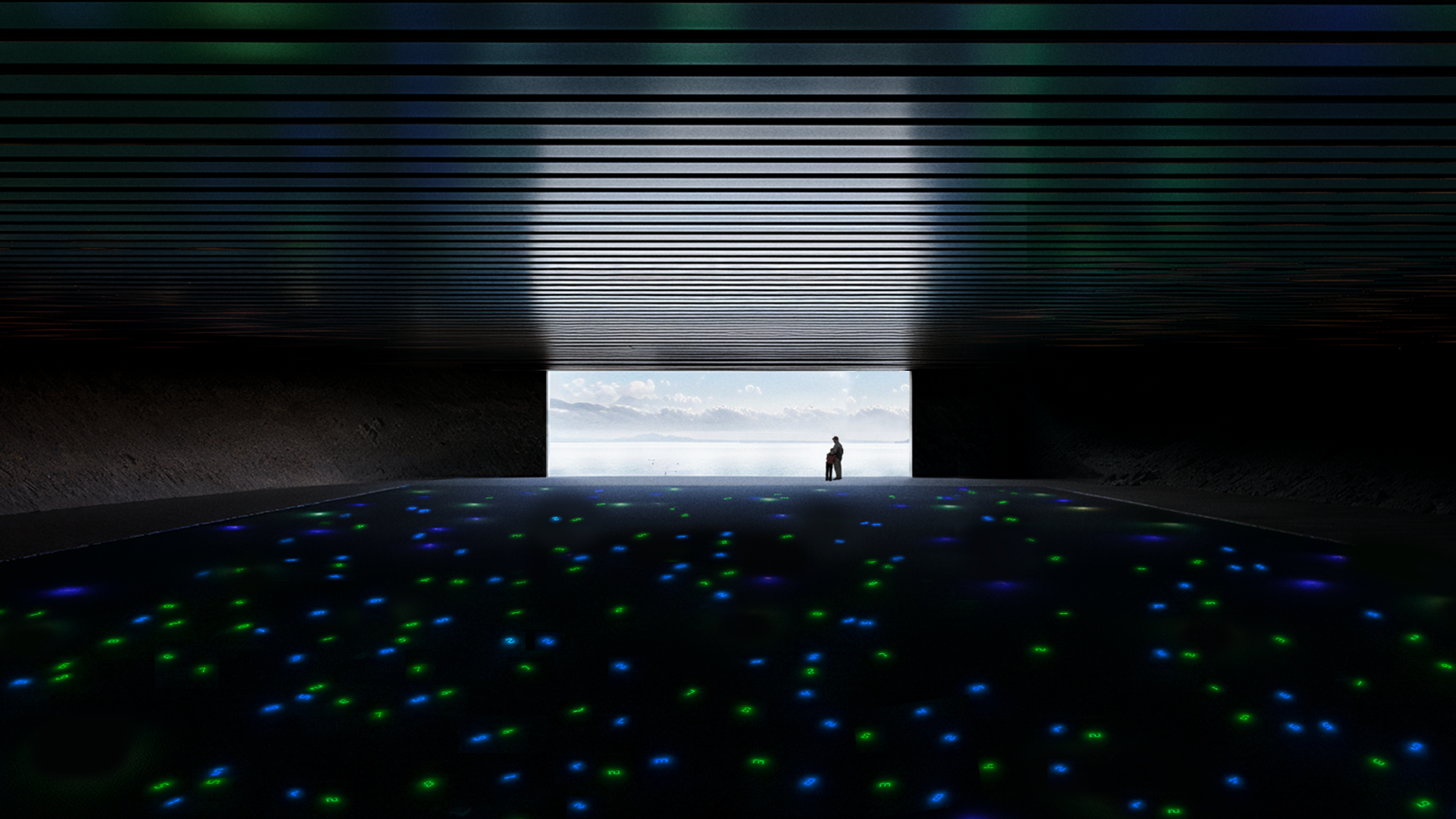
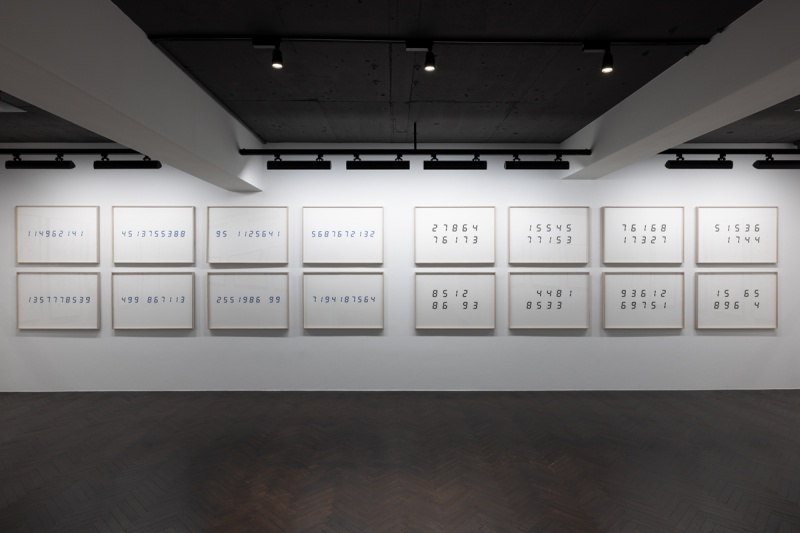
| M : | For myself, the work 133651 represents a person. In the same way that there are billions of stars in the solar system, one person is made up of billions of cells. There is the same kind of scale between one person and the universe. In Buddhism, one person is one and at the same time represents the complexity of the universe. It is impossible to comprehend either the individual person or the universe. How much meaning is there in counting the whole world? The state of research in counting has now given us the quark, and the quest continues, but with what meaning? Of course logical research and analysis is very important, but if you do not complement it with another, global view, the image is too narrowly focused and distorted. |
| L : | Your work in the 133651 series seems to embody not one concept of time but several: linear and cyclical, fast and slow |
| M : | I am making installations which experiment with different types of time. It is not possible to reach a conclusion about one particular system. When we visited the Greenwich meridian yesterday, I was struck by the idea of focal points like zero in western culture. But zero is nothing in reality. The idea of Greenwich Mean Time is based on the measure, and this is not a meaningful concept for me. There is no absolute length of time, only a personal rhythm. Time is life. |
| L : | To what extent does your Buddhism inform your art? |
| M : | Buddhist ideas influence my work because it is part of my life. But art is about questions, religion is about answers. I am posing questions about life to myself and to others. Artists don't know the answers. Let me use an example. A baler may have a religion, but his work as baker is not directly affected. His job is to make delicious bread irrespective of his religion. When I look at Giotto's great frescoes, I recognize noble humanistic and spiritual sentiments although I am ignorant of the Christian background. There is a difference between religion, society and art but all are there to benefit humanity. |
| L : | You would like a humanism reconciled with technology? |
| M : | The first technology is fire. If you think of the importance of fire to people |
| L : | Yes, fire creates warmth and light, but it is also a destructive force‹c What about the conflict between the positive and negative aspects of technology? |
| M : | Artists must take responsibility in extracting the positive aspects of technology. If people think negatively, then people act negatively. I have to think and act positively. |
| L : | In your earlier electronic works, you used to reveal the technological structure, the wires and the circuits. In the more recent works they have been concealed. |
| M : | I want to achieve a concentration on the central themes. The point now is the number, and the universe of numbers. Before 1987, I didn't have confidence in the central themes. But in 1987, I found the three very clear concepts in my work _ Keep Changing, Connect with Everything, Continue Forever. |
| L : | You said that your work is concerned with the future, and you have an egalitarian idea of a world society without hierarchy. But it is quite possible to speculate that despite the charade of democracy, the society of the future will become more intensively hierarchical. |
| M : | What do we do? Of course there are many difficult things in this world. Do we allow this situation to continue, or do we make an effort to create change? In the 60s people created an imaginary, Utopian goal for themselves, but their image was still one system. I wan to create change, but in relation to the three concepts. It is not about creating a beautiful image or system, it is more about creating an inner spiritual quality in the world. My idea of the future is not a pictorial image but a spiritual concept. |
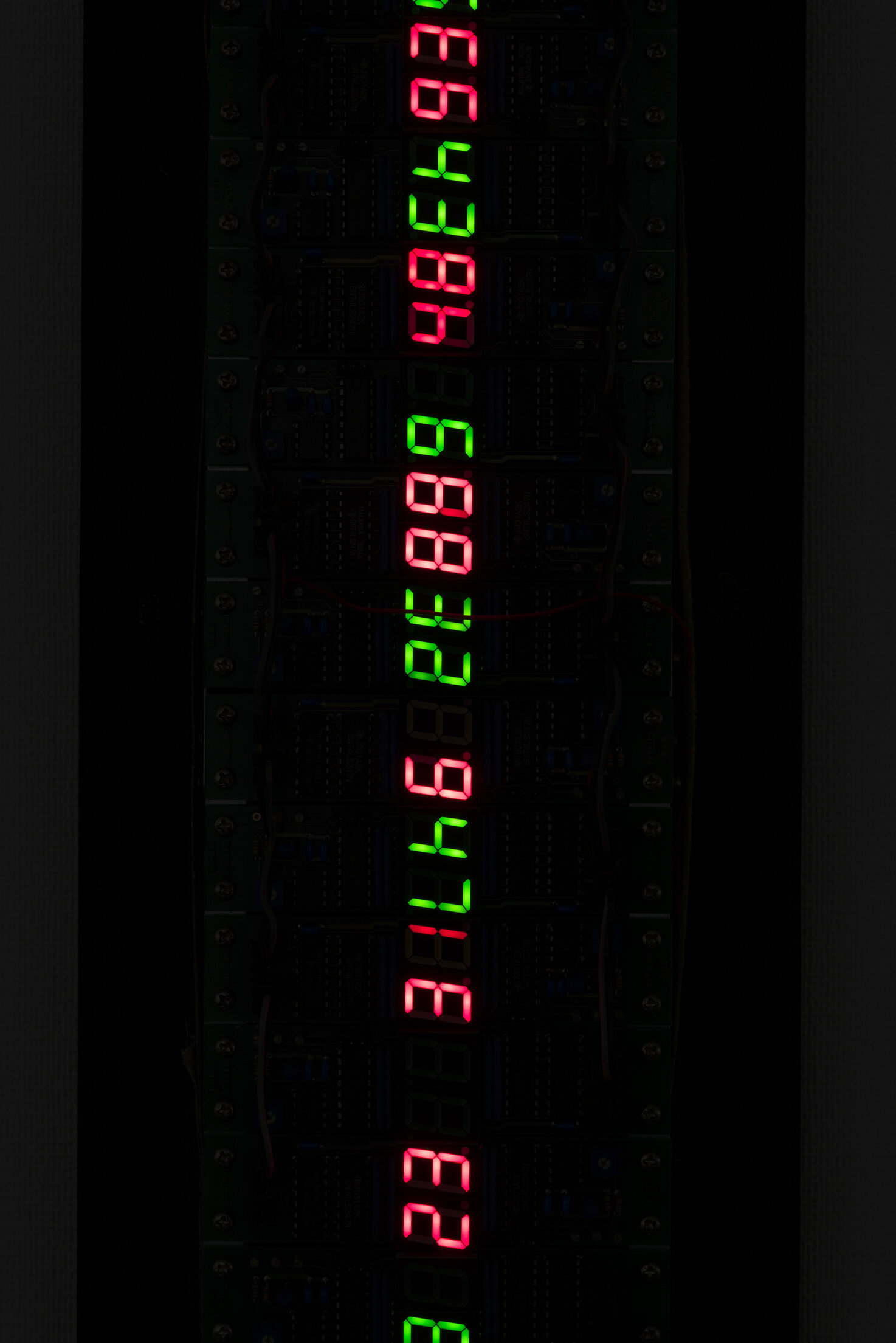
| L : | Why dose the figure zero not appear in any of the digital counters? |
| M : | Zero is a western concept. There is no physical zero. |
| L : | Doesn't zero represent a void, and isn't the void as a concept fundamental to Eastern philosophy? |
| M : | In Buddhist philosophy we have the word Ku which means emptiness, which is very different from zero. The word Ku is realistic emptiness, physical emptiness. For example, the Lotus Sutra in Buddhist philosophy contains 24 negatives or denials to express Ku; not square, not circular, not big, not small etc. There is no clear or substantial answer, so it is not possible to use zero. I want to express Ku which is different from zero: Ku contains the cycle of life and death. |
| L : | You sometimes use the form of a circle in your work, in which the dark space within is as important as the flickering red numbers. How does this circle relate to what you have just said? |
| M : | The circle is often used in oriental systems of time, and it is also recurrent in ancient cultures, from Stonehenge to Arabia. But Ku does not have a shape or form. |
| L : | Why do you use the colours red and green? |
| M : | This is a technical matter - in the LED boards, red and green are the strongest lights. I may use blue in the future, because the technology is now creating a very strong blue. |
| L : | Are you trying to create a 'technological sublime'? |
| M : | I do not intent to create the sublime. |
| With thanks to the interpreter Sachiko Tamashige And the translator, Kyoko Sugai. Frieze issue 3 1992 |
| Page 1 2 |
|
|
||